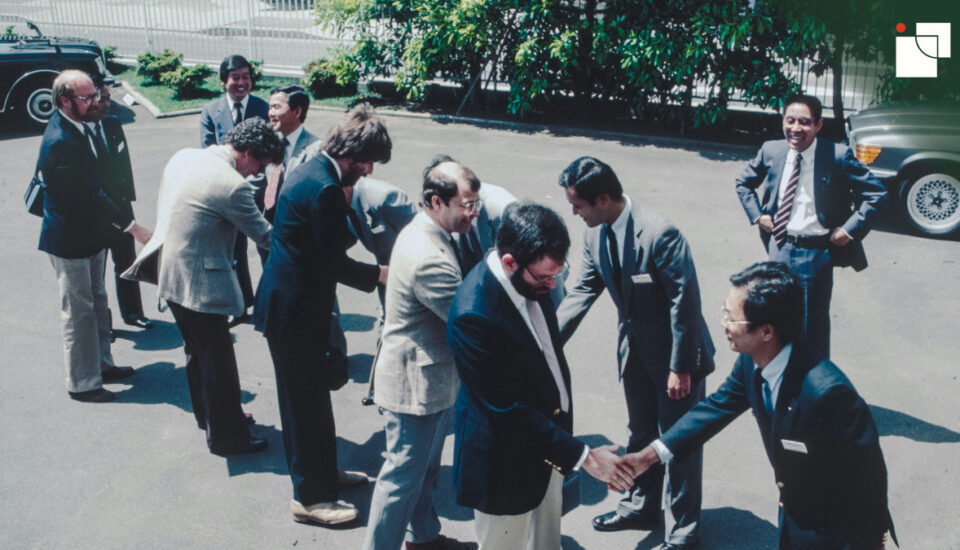
Cross-cultural body language is the part of professional communication that operates before anyone speaks, and the part most likely to be misread abroad.
Balance, Not Assimilation
Global leadership today requires openness without losing identity.
Cling too tightly to familiar cultural patterns and you may appear rigid or closed-minded. Assimilate completely and you risk diluting your authentic identity and limiting personal development.
The goal is equilibrium: confident roots, flexible branches.
One practical way to build that balance is through understanding etiquette across cultures. Etiquette is not a collection of outdated rules. It reflects what a society values, status, modesty, warmth, punctuality, hierarchy, trust.
When young leaders understand both their own cultural codes and those of others, they develop perspective, and perspective is power.
Body Language: The Message Before Your Message
Before you speak, you communicate.
- Posture. An open posture, calm movements, and a composed, not rigid, presence signal confidence and credibility.
- Facial cues. A slight smile, relaxed features, attentive eyes: these shape how safe and competent you appear.
- Eye contact. In many cultures, steady eye contact signals confidence. In others, especially across age or hierarchy, it may feel intrusive. Cultural awareness here is essential.
- Gestures. Keep gestures neutral until you understand local meanings. Some familiar hand signs, such as the “OK” ring, carry negative or vulgar meanings elsewhere.
- Adornments. Jewellery, pins, watches, or visible tattoos all communicate identity and values. What feels personal to you may be interpreted differently in formal or diplomatic settings.
Cultural Awareness While Travelling or Representing Your Country
- Personal space. Preferred distance varies widely across cultures. When unsure, maintain slightly more space and observe others’ comfort zones.
- Public touch. Handshakes, bows, cheek-kisses, or no touch at all. In formal environments, follow the host’s lead.
- Duration of eye contact. Aim for engaged, not intense. Adjust for seniority, age, and context.
- Greetings and gestures. Learn the local default greeting. Avoid high-risk hand signs until you’re confident in their meaning.
A Personal Reflection, and a Broader Lesson
I grew up in a more rigid, Soviet-influenced Eastern European environment where smiling at strangers was often seen as superficial or naïve.
Travel reshaped that perspective. In many parts of the world, a polite smile is simply social ease, a sign of openness and goodwill.
Yet at home, smiling too much in public can still be misinterpreted.
The lesson is not to abandon your cultural identity. It is to adapt to context, and to understand that no single norm is universally “correct.”
A Toolkit for Global Settings
For young leaders stepping into international environments:
- Arrive with a neutral default: professional attire, relaxed posture, minimal gestures
- Mirror lightly: adapt to tone, pace, and space, without imitation
- Stay cautious in high-risk zones: ambiguous gestures, overly familiar touch, strong political symbols
- Use titles and names respectfully; pronounce names carefully
- Practise digital diplomacy: clear subject lines, respectful greetings, timely replies
- Be intentional with appearance: clothing and accessories should align with the setting and message you want to send
Bottom Line
Manners are neither outdated nor ornamental.
For today’s emerging leaders and future diplomats, etiquette and nonverbal intelligence are strategic assets — portable forms of soft power that strengthen presence, credibility, and trust.
As Zeno of Citium put it, as recorded by Diogenes Laërtius:
“We have two ears and one mouth, so we should listen more than we say.”
The reminder is simple: observe and listen first. Speak when it adds value.
Proper behaviour, a composed presence, and a thoughtful appearance are not vanity. They are signals of respect, competence, and intention, qualities that define the leaders and diplomats of tomorrow.
Frequently Asked Questions
Which gestures should be avoided internationally?
The safest approach is to keep gestures minimal until local meanings are known. Several common Western signs, including the “OK” ring, the thumbs-up, and the two-fingered V, carry offensive meanings in particular countries. Pointing with a single finger and showing the sole of the foot are also best avoided in many contexts.
How much eye contact is appropriate abroad?
It varies considerably. In much of Western Europe and North America, sustained eye contact signals sincerity. In parts of East Asia, the Middle East and Africa, prolonged eye contact with a senior person may read as challenge rather than confidence. Observing what others do is more reliable than any general rule.
How do you adapt to another culture without losing your own identity?
By adjusting form rather than substance. Matching the local register of formality, greeting and distance is courtesy; abandoning your own conventions entirely tends to read as imitation rather than respect. Confident roots, flexible branches.
Cultural Fluency, Studied Properly
Reading and adapting to unfamiliar cultural codes is a competence rather than an instinct. Our CPD-accredited online course Foundations of Social & Cultural Etiquette covers cross-cultural greetings, dress codes and cultural sensitivity, first impressions, and dining etiquette across contexts.
Self-paced, with lifetime access and a professional certificate on completion.



