
Table Etiquette: The Language of Glassware
February 10, 2026
A beautifully set dining table often includes sparkling glassware, so common today that it’s easy to forget how recent this tradition really is.
Throughout much of history, glassware was a luxury, as prized as porcelain and silverware. Until the late 19th century, only the wealthy could afford it. With the rise of mass production, glass became more accessible, while silver retained its prestige as a commodity.
A Short History of Glassware
In earlier centuries, wine glasses were symbols of status rather than practicality. Tall, ornate designs looked spectacular but were hardly comfortable to drink from, often reserved for the host and honored guests.
Even into the 18th century, guests didn’t always have their own glasses. Wine was sipped intermittently or for toasts, and glasses were often shared.
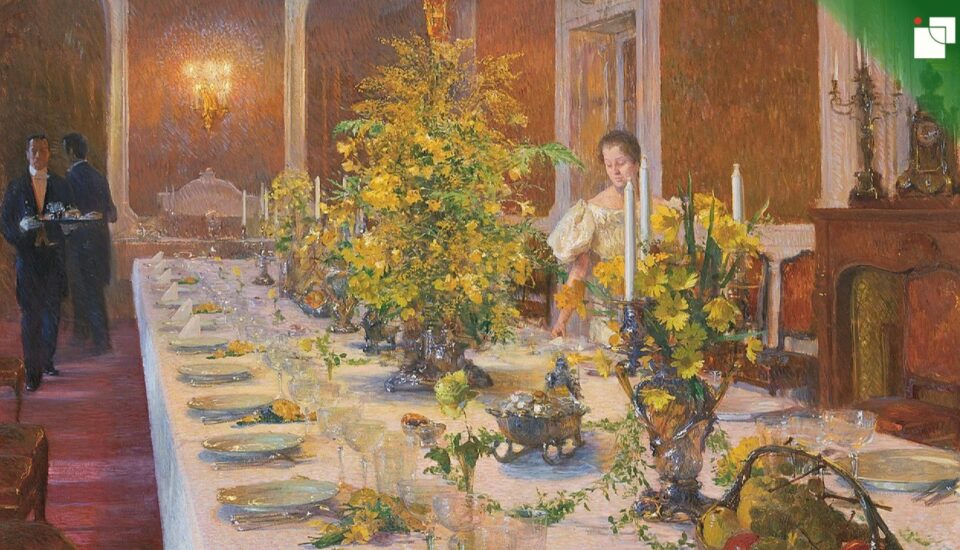
The practice continued over the years, because the ‘sharing’ of glasses not only kept down the cost of extensive glassware, but fitted in well with the fashion of à la française dining style, a table richly set with with many dishes from which guests served themselves, each pairing their chosen food with their preferred wine.
A practice still encountered in Russia and in many post soviet countries.
By the 19th century, the shift to service à la russe, which means serving individual courses transformed dining habits. For the first time, multiple glasses were used to complement different wines throughout a meal.
Modern Glassware Etiquette
A refined table tells a story of elegance and respect. Here are a few timeless principles to remember:
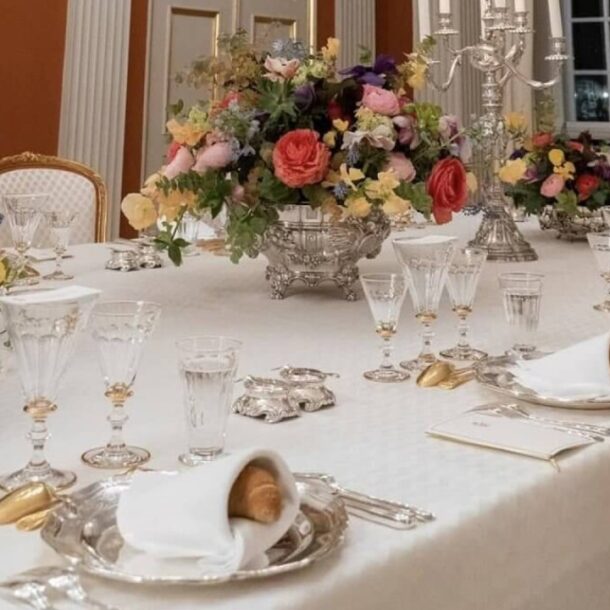
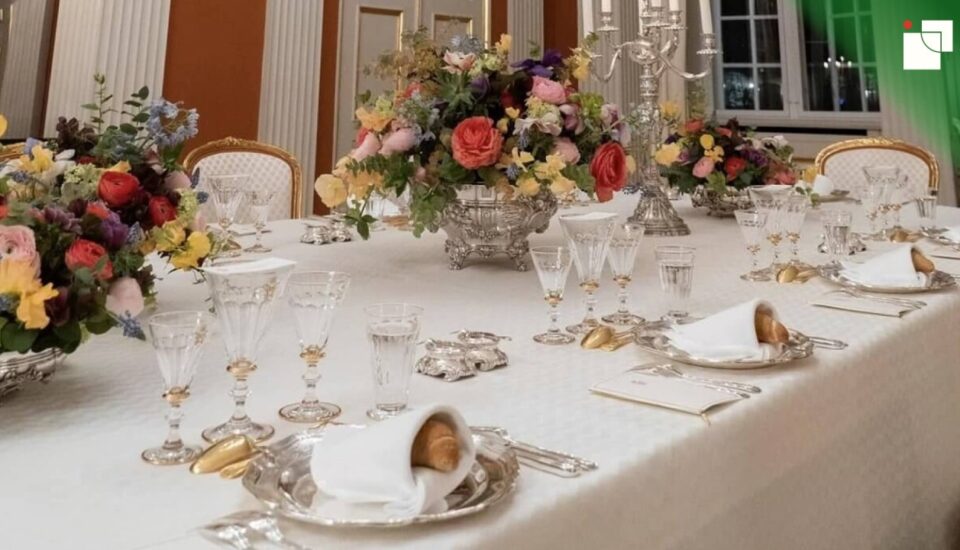
• The glasses are often set in a cluster formation and follow the rule of the closest glass to the diner being used first, and the furthest away being used last. If the glasses were set in a diagonal line instead, they should still follow the order of use of “proximity to the diner” rule.

• Hold by the stem (British etiquette) or the bowl (French/Continental). but always avoid excessive contact to keep the glass spotless.
• When toasting, clink gently or simply raise your glass and make eye contact. Fine glassware deserves care.
• In business dining, moderation is key. Never refill unless invited.
• And finally, match the glass to the drink, because it’s a subtle sign of cultural awareness and respect for tradition.
Whether you’re hosting a formal dinner or attending a corporate meal, understanding the language of glassware is more than just etiquette, it’s a sign of sophistication.